When comparing fiberglass vs vinyl vs concrete pools which is the best choice depends on your lot, budget, timeline, design goals, and future upkeep. Every pool type can create a backyard oasis, but Ontario homeowners must also consider frost, drainage, winter closing, access, and long term costs.
Fiberglass pools offer faster installation and a smooth surface. Vinyl liner pools provide flexible shapes and a lower average initial cost. Concrete pools allow the most customization, including attached spas, beach entries, and virtually any shape. This guide compares fiberglass vs vinyl liner vs concrete pool construction for an informed inground swimming pool decision.
When comparing fiberglass vs vinyl vs concrete pools which is the best choice depends on your lot, budget, timeline, design goals, and future upkeep. Every pool type can create a backyard oasis, but Ontario homeowners must also consider frost, drainage, winter closing, access, and long term costs.
Fiberglass pools offer faster installation and a smooth surface. Vinyl liner pools provide flexible shapes and a lower average initial cost. Concrete pools allow the most customization, including attached spas, beach entries, and virtually any shape. This guide compares fiberglass vs vinyl liner vs concrete pool construction for an informed inground swimming pool decision.
Choosing a Pool Type for Ontario’s Climate
Ontario’s climate places unique demands on any ground pool. Freeze-thaw movement can pressure walls, plumbing, and hardscaping, so a durable swimming pool needs proper excavation, stable base materials, drainage, backfill, and winterization.
Installation quality matters as much as pool type. A well-built vinyl pool can outperform a poorly installed alternative, while an engineered gunite pool can provide decades of use. The pool planning process should address soil, groundwater, grading, equipment, access, fence installation, and the permit process.
Picking pool materials based only on installation pricing is risky. The initial cost matters, but so do liner replacement, refinishing, chemical usage, equipment efficiency, and ongoing maintenance. Actual costs depend on access, size, excavation, decking, safety features, landscaping, and the pool model.
Fiberglass Pools
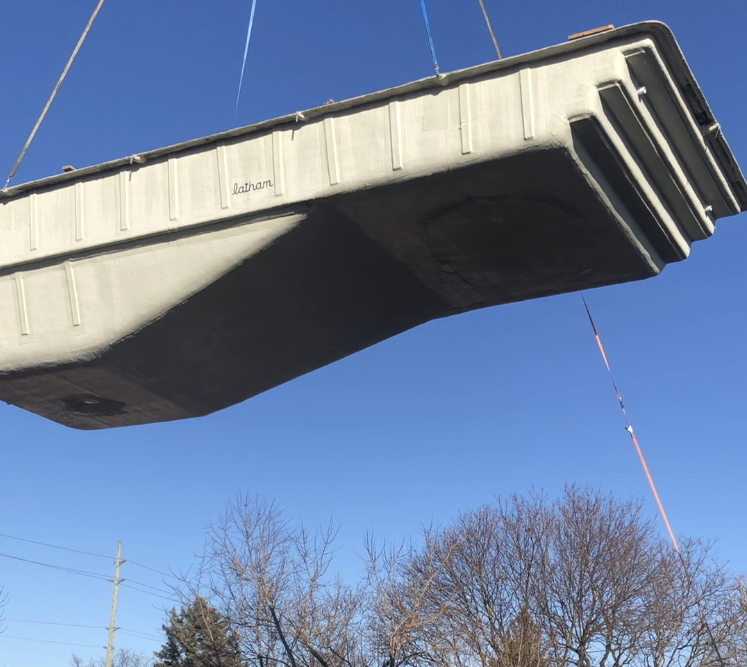
Fiberglass pools arrive as a pre-manufactured fiberglass pool shell placed into a prepared excavation. Fiberglass pool manufacturers offer established shapes, depths, steps, benches, ledges, and finishes. Off-site production usually means shorter installation time than many concrete pools.
A fiberglass pool has a comfortable gel coat surface and a non porous surface that can simplify cleaning and support lower chemical usage when proper water chemistry is maintained. Fiberglass shells also have some flexibility when the base, backfill, drainage, and water levels are managed correctly.
The Advantages of Fiberglass
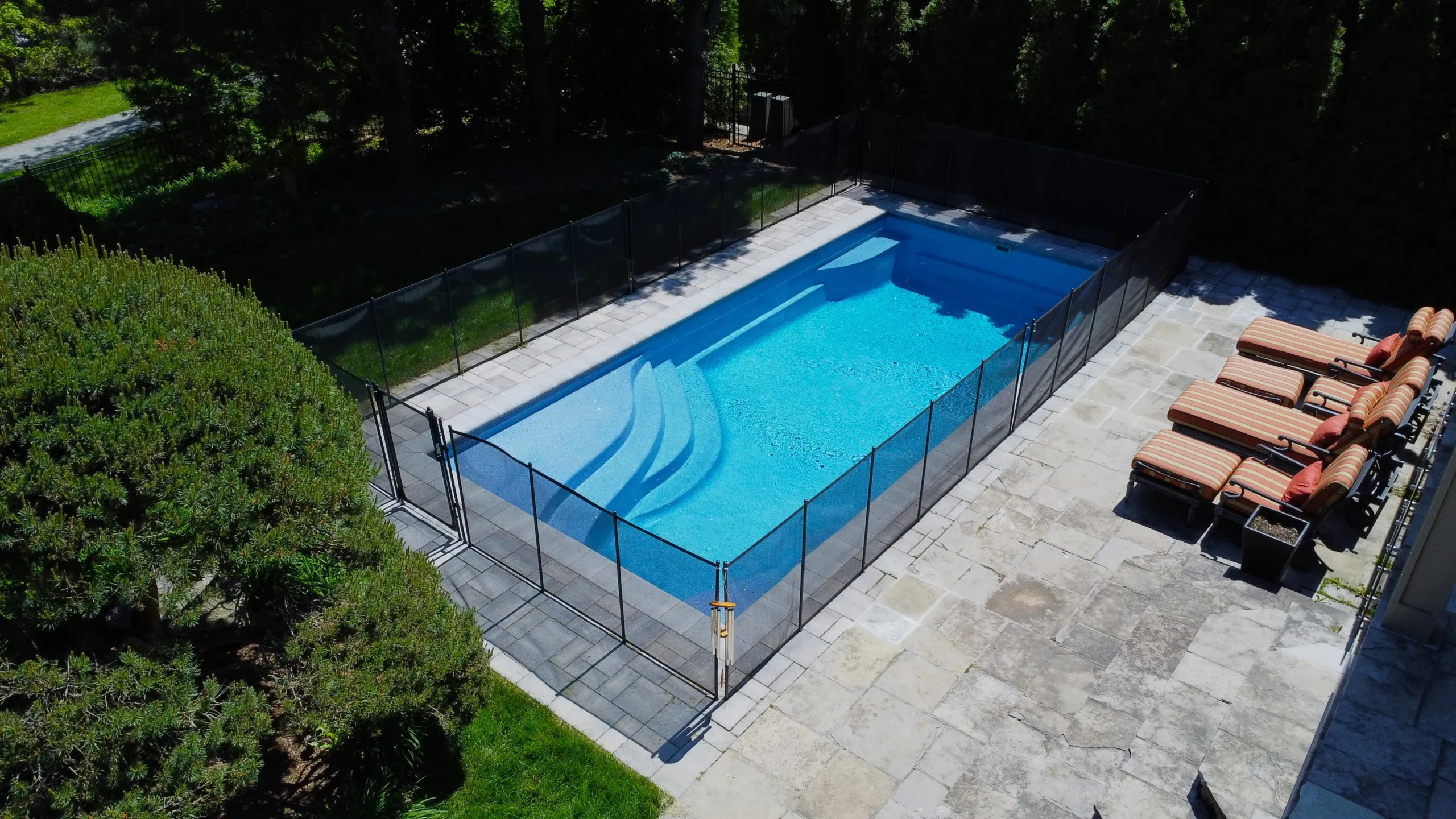
The first advantage of fiberglass pools is speed. Once permits, excavation, and site preparation are complete, the shell can be placed quickly. Plumbing, electrical work, coping, decking, inspections, and landscaping still take time, but this pool avoids the arduous months long process of a custom gunite pool.
The smooth surface resists algae attachment and may require fewer chemicals, reducing pool maintenance and some long term ownership costs.
Built-in steps, benches, ledges, or an accessible entry point can also create a predictable ready to use pool. For families seeking a dependable ground pool, fiberglass pools balance durability, speed, straightforward care, and a coordinated backyard aesthetic.
The Drawbacks to Weigh
The largest limitation is design flexibility. Fiberglass pools use existing moulds, so dimensions, depths, steps, and benches cannot be changed freely. The fiberglass pool shell must also reach the yard by truck and crane.
The initial cost is often higher than for basic vinyl liner pools, with installation costs rising on tight or difficult sites. Homeowners should review the manufacturer, warranty, and installation method because even a strong shell depends on precise excavation, base preparation, backfilling, drainage, and supported plumbing.
Who Fiberglass Suits Best
Fiberglass pools suit homeowners who want shorter installation time, lower routine maintenance, and a refined finish. This pool type works for families who prefer a proven shape and want the ground pool and surrounding landscape completed within one coordinated season.
Vinyl-Liner Pools
Vinyl liner pools use structural walls, a prepared floor, and a flexible vinyl liner for the waterproof interior. Walls may be steel, polymer, or another engineered system.
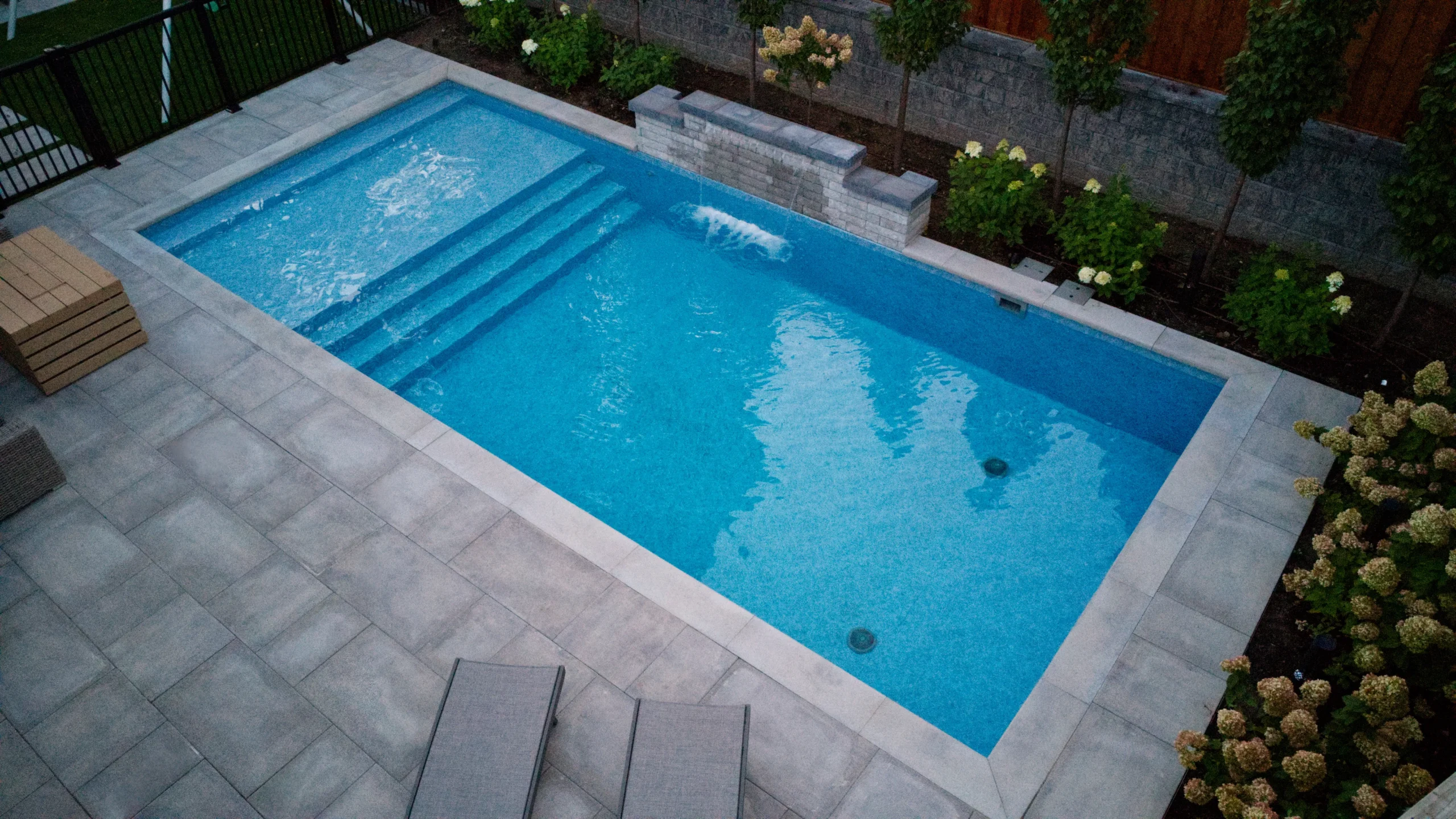
Among common inground pool options, vinyl liner pools balance affordability and flexibility. A vinyl pool can use many shapes, while the vinyl liner comes in numerous patterns and colours to coordinate the pool’s surface with coping and landscaping.
The Advantages of Vinyl
The biggest advantage of vinyl liner pools is affordability. A standard vinyl pool often has a lower initial cost than a comparable fiberglass pool or concrete pool, although the total cost changes with size, access, features, and finishes.
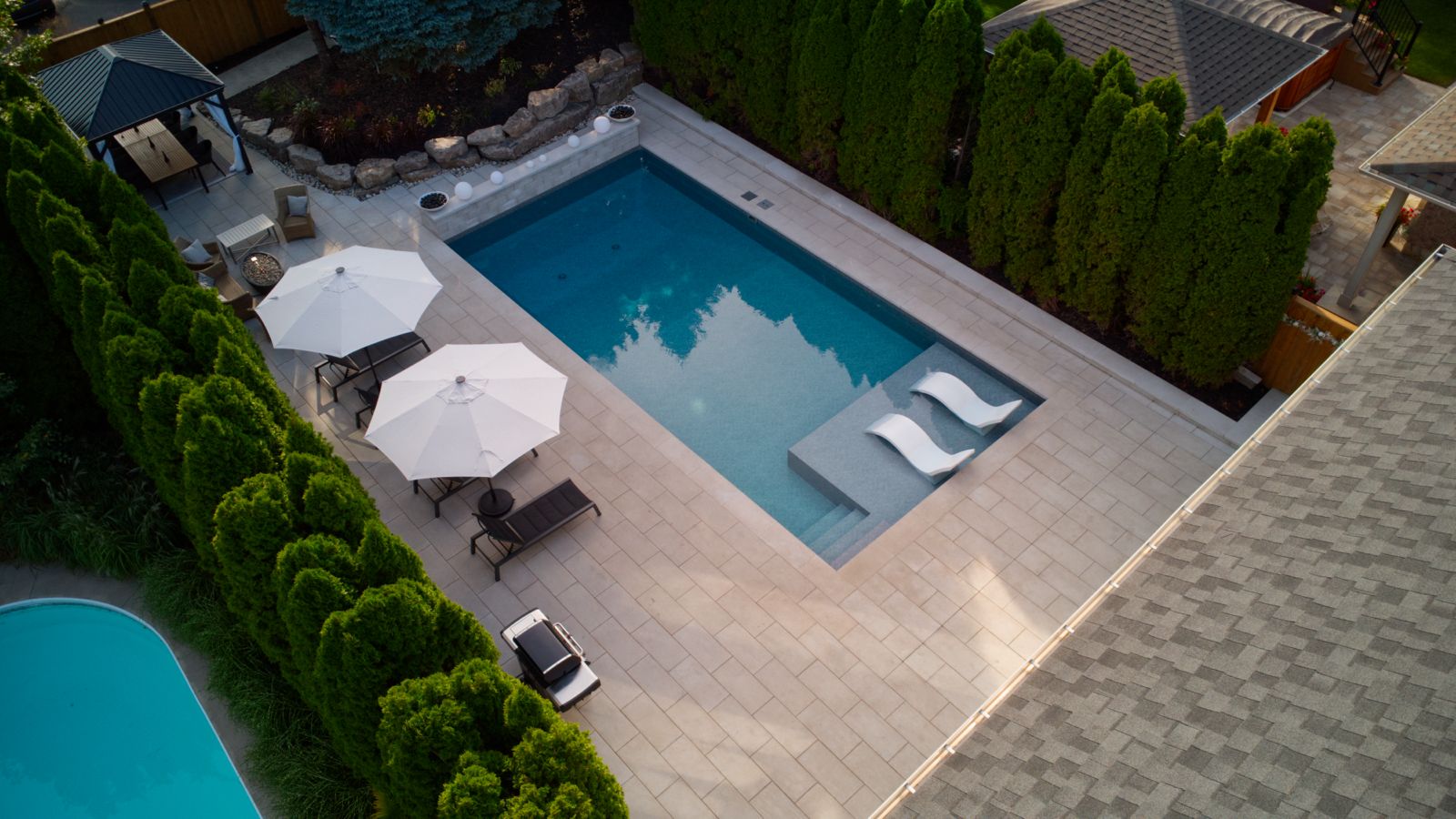
Vinyl liner pools also offer more customization than pre-moulded fiberglass pools. Rectangular or freeform layouts, custom steps, varying depths, and different walls make this pool type useful where a standard shell does not fit.
The vinyl liner provides a smooth surface and can completely refresh an existing pool with a new pattern. In a fiberglass vs vinyl liner comparison, vinyl often wins for flexible dimensions and entry-level pool cost without the full gunite process.
The Drawbacks to Weigh
The vinyl liner is replaceable, so owners must budget for eventual liner replacement. Its life varies with installation, water balance, sunlight, winter conditions, use, and damage from sharp objects or unsuitable tools.
Vinyl liner pools require routine maintenance. Poor chemistry can fade, wrinkle, or weaken the vinyl liner, while groundwater can cause movement behind it. Proper opening and closing are especially important in Ontario’s climate.
Although the initial cost can be lower, long term costs should include liner replacement. Some owners may also prefer the permanent appearance of tile, plaster, or aggregate finishes available with concrete pools.
Who Vinyl Suits Best
Vinyl liner pools suit homeowners who want a customizable inground swimming pool on a controlled budget. This pool type offers more shape flexibility than fiberglass pools without the higher pool cost of concrete pools. A vinyl pool also suits large rectangles, deep ends, custom steps, and setback-driven layouts, provided owners plan for care and future liner replacement.
Concrete & Shotcrete Pools
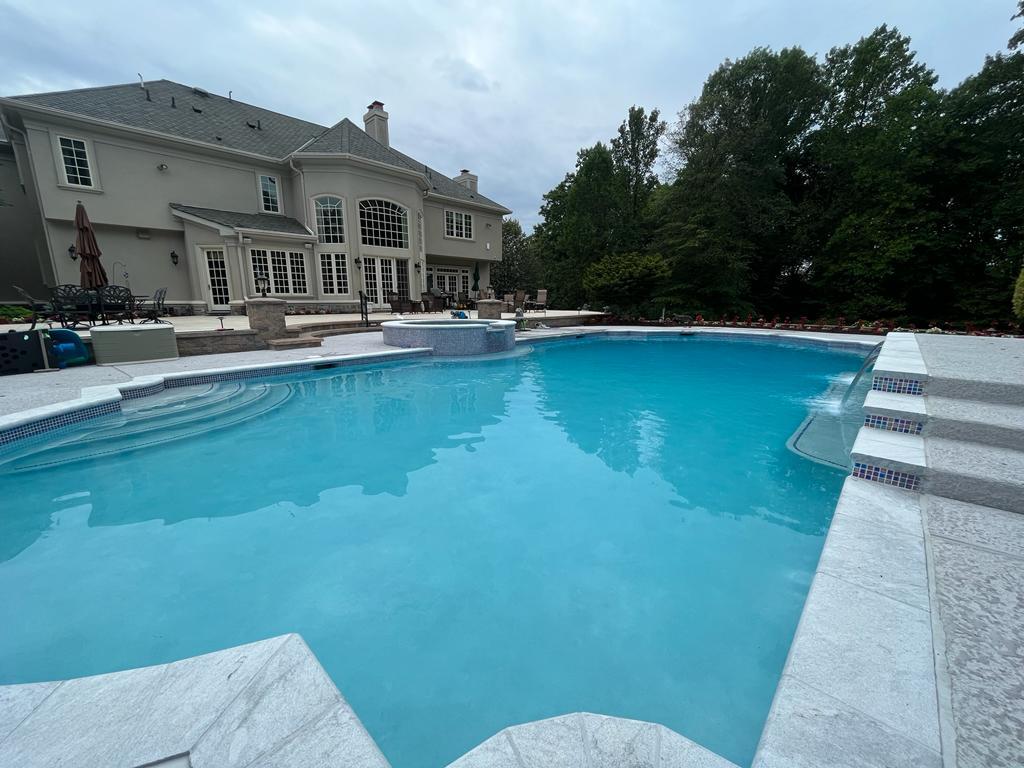
Concrete pools are built on-site using reinforced steel and pneumatically applied concrete. The project may be called a shotcrete pool or gunite pool, with both creating a customizable structural shell.
A gunite pool is not limited to factory moulds. It can respond to architecture, elevation changes, entertainment zones, and the desired style of the property.
The Advantages of Concrete
The main benefit of concrete pools is design freedom. A skilled designer and building team can create custom geometry, depth transitions, seating, raised walls, ledges, and water features.
Concrete pools can also achieve a permanent, high-end appearance through tile, coping, plaster, aggregate, stone, and custom finishes. For a unique dream pool, concrete offers possibilities that standard fiberglass and vinyl systems cannot fully match.
A properly engineered gunite pool can offer excellent pool longevity. Repairs, resurfacing, and updated finishes make it suitable for estate properties and complex landscapes.
The Drawbacks to Weigh
Concrete pools usually have the highest average initial costs. Labour, steel, plumbing, forming, the gunite process, curing, waterproofing, finishing, and tile all affect the total cost.
Installation time is longer because weather, inspections, curing, and trade sequencing can create an arduous months long process. Homeowners need a price estimate based on the full property plan.
The pool’s surface is more porous than fiberglass or a vinyl liner. It may require brushing, chemical control, acid washing, and resurfacing. Regular acid washing is not always required, but some finishes may need costly acid washing.
Who Concrete Suits Best
Concrete pools suit homeowners who prioritize customization over speed and initial cost. This pool type fits complex lots, premium landscapes, unusual shapes, and integrated architecture.
The concrete pool takeaways are straightforward: expect maximum flexibility, a longer schedule, a higher pool cost, and more surface care. With those trade-offs understood, a gunite pool can become a lasting centrepiece.
Side-by-Side Comparison
Fiberglass vs vinyl liner vs concrete has no universal winner. Each pool type suits a different budget, timeline, property, and design goal.
A useful comparison should also consider how the pool will be used. A family focused on casual swimming may value simple steps, dependable heating, and an uncomplicated pool shape. A homeowner building a luxury entertainment space may prioritize a dramatic pool design, custom lighting, integrated seating, and premium finishes. The right ground pool should support both the property and the daily routine around it.
Think about the complete pool area, not only the structure in the ground. The patio, grading, drainage, equipment, fencing, plantings, and access routes all influence how the finished pool performs. A lower-priced pool can become expensive when extensive site work is required, while a higher-quality pool installation may reduce avoidable repairs and disruptions later.
Pool ownership also involves seasonal opening, winter closing, water testing, cleaning, and equipment service. Fiberglass, vinyl, and concrete surfaces create different care requirements, but every pool benefits from consistent professional attention. Planning these responsibilities early helps homeowners choose a pool they can comfortably maintain.
Finally, separate must-have features from optional upgrades. This keeps the dream pool focused on the features your household will actually use and helps the final pool remain aligned with the available space and budget.
Upfront Cost
Vinyl liner pools usually provide the lowest initial cost for a standard inground pool. Fiberglass pools often sit in the middle, while concrete pools generally have the highest starting price.
Actual costs depend on excavation, soil, access, groundwater, size, decking, utilities, equipment, fencing, and landscaping. Ask for a price estimate based on a complete site review.
Treat national average selling data cautiously. Labour, pool materials, codes, and access vary by region, so Ontario pricing should not rely on a national average selling number.
Installation Time
Fiberglass pools generally offer the shortest installation time because the shell arrives finished. Vinyl liner pools follow, with on-site wall, floor, plumbing, and liner work. Concrete pools take the longest because the gunite process includes structural preparation, application, curing, and interior finishing.
A ready to use pool still depends on decking, utilities, inspections, drainage, and landscaping.
Maintenance & Lifespan
Fiberglass pools typically have the lowest ongoing maintenance because of their non porous surface. Vinyl liner pools are also comfortable and relatively easy to clean, but the vinyl liner will eventually need replacement.
Concrete pools can provide exceptional structural pool longevity, although their finishes require more care and periodic renewal. Many concrete pools last for decades when maintained, repaired, and resurfaced as needed.
Fiberglass vs vinyl may favour fiberglass for surface durability, while vinyl liner vs concrete may favour vinyl for easier care. Concrete wins when permanent customization matters most.
Design Flexibility
Concrete pools offer unmatched design flexibility. Vinyl liner pools rank second because builders can adjust dimensions, depths, steps, and wall layouts. Fiberglass pools are limited to available manufacturer moulds, but modern collections still provide attractive pool options.
Any pool type can be elevated through coping, decking, gardens, lighting, and water features.
Freeze-Thaw Durability in Ontario
All three systems can perform well in Ontario’s climate when installed, drained, and winterized correctly. Fiberglass has some flexibility, while vinyl liner pools combine structural walls with a flexible waterproof interior. Concrete pools provide a rigid reinforced shell but must be engineered for soil, groundwater, and frost.
Freeze-thaw durability also depends on base preparation, drainage, backfill, plumbing protection, winter covers, and seasonal water levels. Professional ground pool installation should address these conditions before excavation.
Matching the Right Pool Type to Your Property
Start with the lot. Access may limit fiberglass delivery, setbacks may affect a vinyl pool, and elevation changes may favour a custom concrete pool.
Choose fiberglass pools for speed and simpler care, vinyl liner pools for budget and dimensional flexibility, and concrete pools for custom geometry or luxury finishes.
Review the permit process, drainage, utilities, tree protection, and safety features early. The best inground pool plan coordinates the swimming pool, equipment, patio, grading, fencing, and planting.
Find the Right Pool for Your Ontario Backyard
Mayascapes helps homeowners compare fiberglass vs vinyl liner vs concrete using their property, goals, timing, and budget rather than a one-size-fits-all recommendation.
Whether you are planning a fiberglass pool, flexible vinyl liner pool, or custom gunite pool, the goal is a swimming pool that suits your family. Thoughtful planning can turn your own backyard into a functional retreat and improve the backyard pool experience.
Contact Mayascapes to explore the ground pool layout, equipment, finishes, and landscape details that bring the best pool material and perfect pool design together.
FAQs
Which pool type lasts longest in Ontario winters?
A reinforced concrete pool can offer the greatest structural lifespan, but it needs more surface care and eventual refinishing. Fiberglass pools can also perform very well through Ontario winters because the shell has some flexibility and a durable gel coat surface. Vinyl liner pools remain dependable when installed correctly, winterized properly, and protected from groundwater movement. Installation quality is as important as pool type.
What is the cheapest pool type to install?
Vinyl liner pools usually have the lowest average initial costs. A basic vinyl pool often costs less upfront than comparable fiberglass pools or concrete pools. The total cost still depends on size, access, excavation, decking, equipment, fencing, and site conditions. Future liner replacement should be included when comparing ownership expenses.
Which pool is the easiest to maintain?
Fiberglass pools are generally the easiest to maintain because their smooth, non porous finish resists algae attachment and can require fewer chemicals. Vinyl liner pools are also relatively easy to clean, while concrete pools need more brushing and surface attention. Every swimming pool still requires filtration, sanitation, testing, seasonal service, and balanced water.
Can fiberglass pools handle Ontario’s freeze-thaw cycles?
Yes. Fiberglass pools can handle Ontario winters when the excavation, base, backfill, drainage, plumbing, and winterization are completed correctly. The structure has some flexibility, but it should still be installed by an experienced building team. Groundwater control and proper seasonal water levels are especially important.
Which pool type adds the most resale value?
Resale value depends on the property, neighbourhood, design quality, condition, and buyer preferences. A high-end concrete pool may add strong appeal to a luxury property, while a low-maintenance fiberglass pool may attract buyers who value convenience. A well-designed vinyl liner pool can also add lifestyle value when the liner and surrounding landscape are in good condition. The strongest result comes from choosing a pool type that fits the home, lot, and local market.